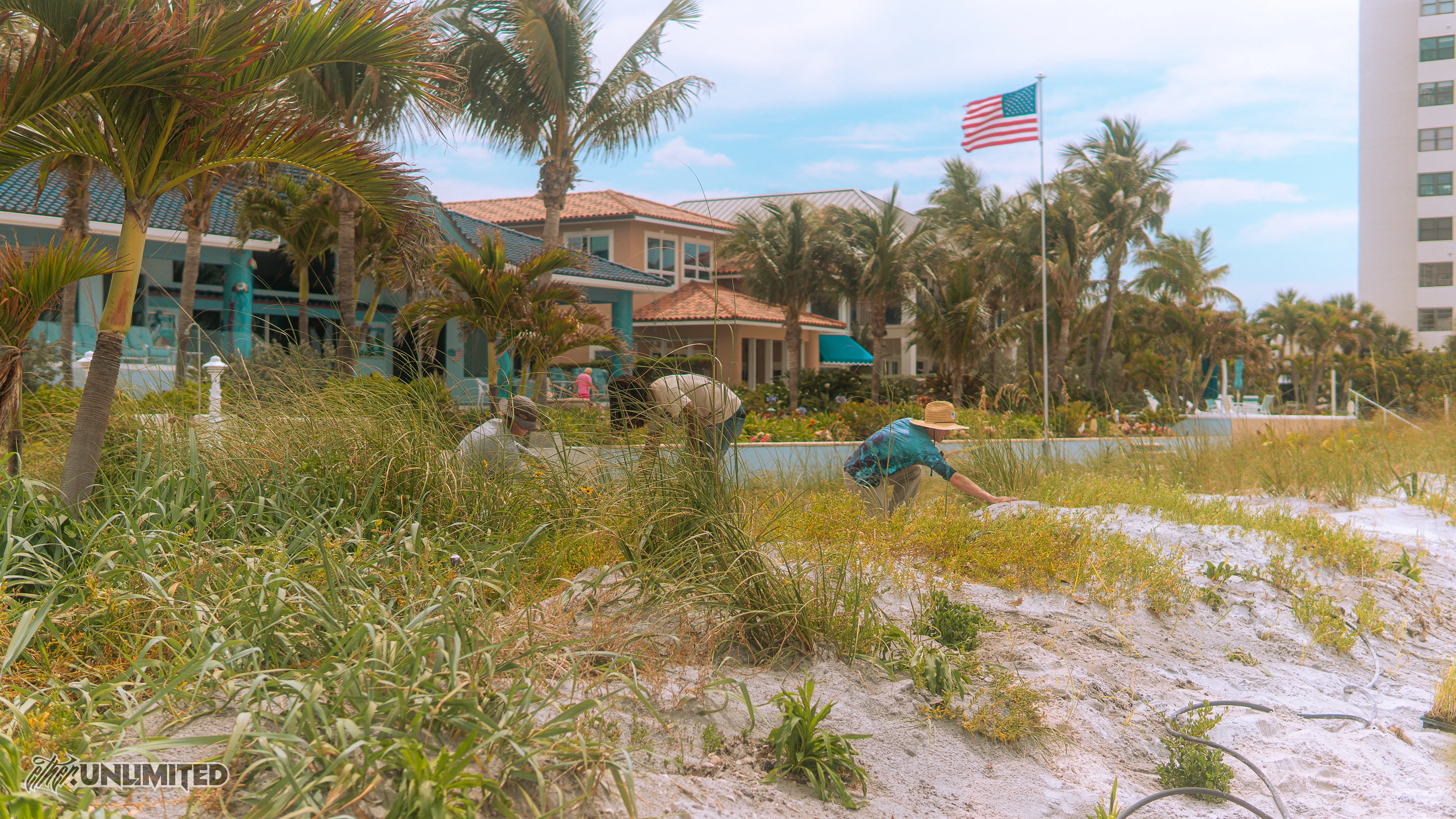
Living Restorations is a FANN-credentialed ecological subcontractor specializing in dune restoration, living shorelines, native planting, and FDEP permit compliance for waterfront development across Tampa Bay, Sarasota, and Clearwater.
The Challenge
Every waterfront project in Florida touches at least one ecological compliance requirement. FDEP Environmental Resource Permits, SWFWMD stormwater rules, CCCL restrictions, USACE Section 404 — the list of agencies and mandates is long, and the planting and restoration work required to satisfy them is specialized.
Most developers bring in a GC who then scrambles to find a qualified ecological sub at the last minute. That creates delays, rework, and permit risk.
What We Provide
Living Restorations works directly with developers as an ecological subcontractor — from preconstruction planning through post-installation monitoring. Every service is designed to satisfy Florida's coastal and environmental permit requirements.
Design and installation of coastal dune habitat using Florida-native species. Required under CCCL permits for any development within the Coastal Construction Control Line.
CCCL CompliantNative grass, oyster reef, and organic material shoreline stabilization as a permit-preferred alternative to hardened seawalls. Protects property value while satisfying environmental review.
FDEP / USACE PreferredSWFWMD-compliant littoral shelf planting for stormwater ponds and water retention areas. Required on most waterfront development projects in the Tampa Bay region.
SWFWMD CompliantPre-construction and ongoing invasive plant removal required for permit compliance and native habitat preservation. Documented and reportable for agency submittals.
Pre-ConstructionPreconstruction site assessment, species identification, and ecological design planning that identifies compliance needs before they become change orders.
PreconstructionPost-installation monitoring, maintenance, and documentation to satisfy permit monitoring requirements and demonstrate ecological success to agencies.
Long-Term StewardshipRegulatory Landscape
Every item below creates a direct need for credentialed ecological subcontracting. Living Restorations understands these requirements — and designs work that satisfies them.
Required for any construction that impacts wetlands, coastal areas, or state waters. Typically requires native plant mitigation, upland buffer restoration, and post-construction monitoring.
Florida Dept. of Environmental ProtectionAny development seaward of the CCCL requires dune system protection or restoration. Native sea oats, beach morning glory, and salt meadow cordgrass plantings are standard permit conditions.
Florida Dept. of Environmental ProtectionSouthwest Florida Water Management District requires native littoral zone planting on stormwater retention ponds — typically 30% or more of the pond perimeter using Florida-native emergent and submerged species.
SW Florida Water Management DistrictUS Army Corps of Engineers permits for work in navigable waters and wetlands typically require compensatory mitigation — native planting, wetland creation, or living shoreline installation.
US Army Corps of EngineersCoastal projects in sea turtle nesting areas require native dune vegetation surveys and restoration to maintain nesting habitat quality. Sarasota County mandates 30-50% native plant preservation on development sites.
FWC / Local Ordinance
Who You're Working With
Kiamesha Wray founded Living Restorations after more than a decade of on-the-ground restoration work across Florida's coasts. She became a Florida Master Naturalist in 2014 and was among the first professionals in the state to earn FANN (Florida Association of Native Nurseries) credentials.
Her work has been featured in Homes & Gardens magazine (November 2025) and spans residential, commercial, and municipal ecological projects across Tampa Bay. Her ISNetworld B-grade contractor rating means Living Restorations can be onboarded directly into standard contractor compliance workflows.
Common Questions
Yes. Living Restorations works directly with waterfront developers as an ecological subcontractor for native planting, dune restoration, living shoreline installation, and FDEP permit compliance work. Kiamesha Wray is FANN credentialed, a Florida Master Naturalist since 2014, and holds an ISNetworld B-grade contractor rating.
Florida waterfront development projects commonly require native littoral plantings for SWFWMD stormwater compliance, dune restoration and sea oat planting under CCCL permits, living shoreline installation as an alternative to seawall hardening, mangrove and marsh buffer restoration, invasive species removal, and post-construction ecological monitoring. Living Restorations handles all of these.
Living Restorations holds an ISNetworld B-grade contractor rating, which qualifies the company to work on projects that require verified contractor safety, insurance, and compliance documentation through the ISNetworld platform.
The earlier the better. Preconstruction involvement allows Living Restorations to identify ecological compliance requirements before they become expensive permit conditions or change orders. That said, the team regularly steps in during active construction phases to handle native planting, dune restoration, and living shoreline work that is required before permit closeout.
Living Restorations primarily serves the Tampa Bay, Sarasota, and Clearwater markets and works on projects throughout Florida. Based in St. Petersburg, the company has active project experience across Pinellas, Hillsborough, Sarasota, and Manatee counties.
Use the contact form on this page or call or text Kiamesha directly at 727-710-7400. Responses come within one business day. For time-sensitive pre-bid inquiries, texting is the fastest way to reach the team.
Start the Conversation
Whether you are in preconstruction, permitting, or active development — reach out and we will tell you exactly how Living Restorations can support your ecological compliance needs.
We respond within one business day. | Based in St. Petersburg, FL